Launch offer — valid today only

📄 Digital book in PDF · read it on your phone or print it

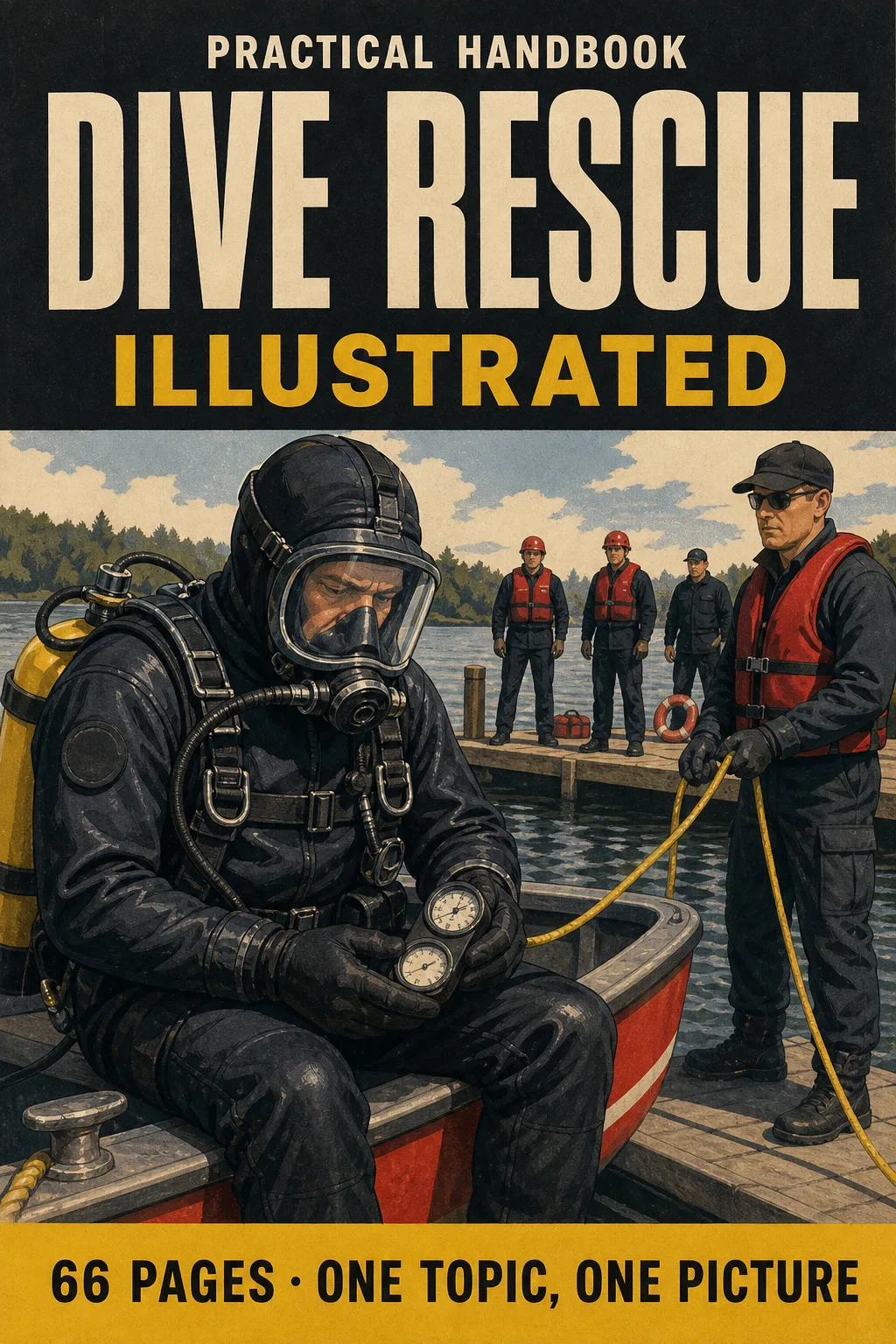
Dive Rescue for NFPA 1006 Certification, Fully Illustrated One Topic on Every Page

Review line signals, search patterns, no-decompression limits and the rule of thirds in the same order every time, without going back to the binder. Plus entanglement, pressure injuries, vehicle recovery and decon. Every topic gets its own page: the drawing first, then what you need to remember. 66 illustrated pages.

I WANT DIVE RESCUE ILLUSTRATED

🔒 Secure checkout · PDF by email · 30-day guarantee

Every topic, its own pageEach signal, pattern and plan drawn, with the explanation beside it
66 illustrated pages9 parts, from the dive rescue job to the pre-exam review
Up-to-date sourcesNFPA 1006 / NFPA 2500, NFPA 1670 and the U.S. Navy Diving Manual Rev. 7
PDF by emailFormat

Look Inside the Book

Every page has one big drawing and a box with the numbers, signals and steps you need to know:

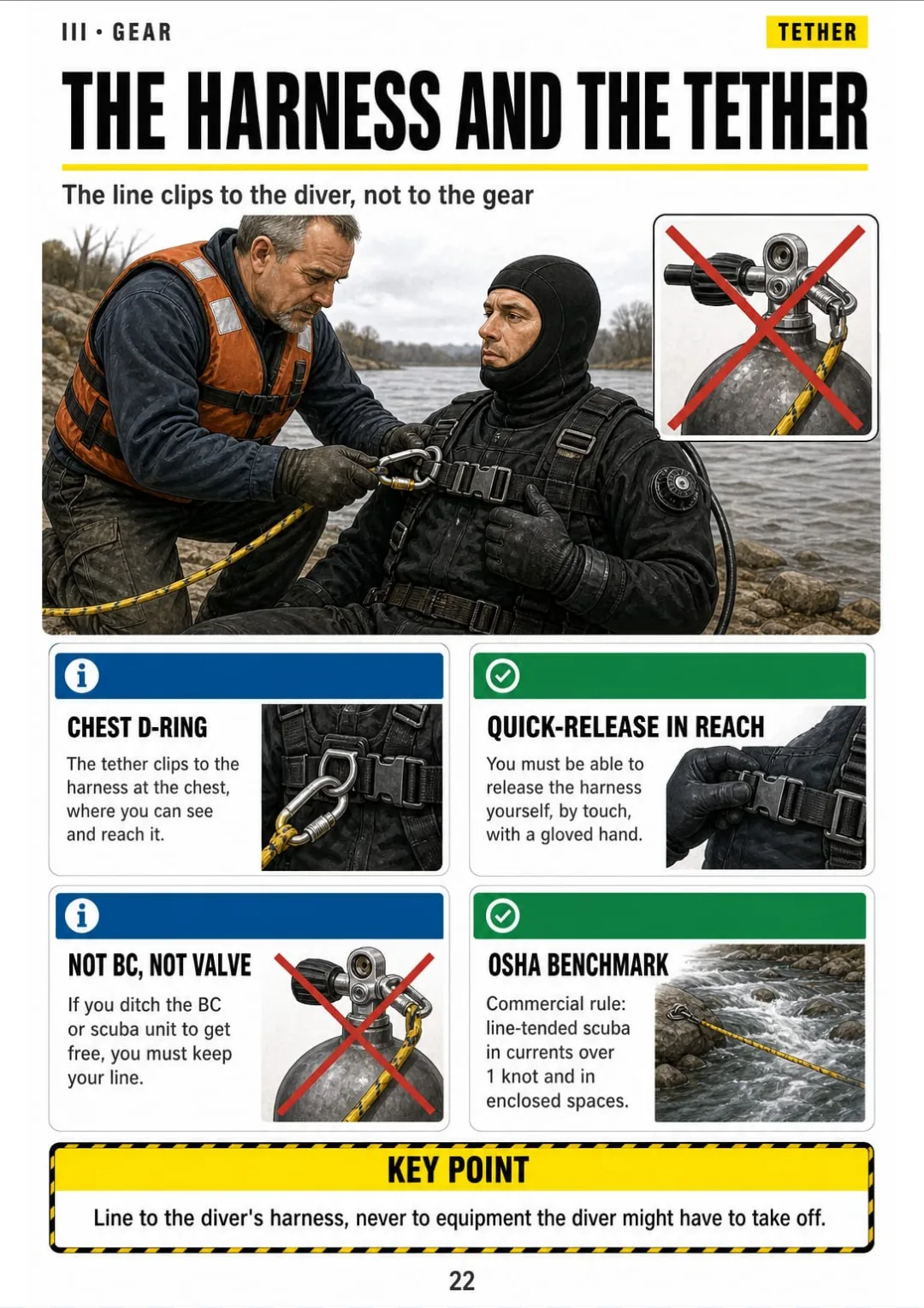
Tether at the chest D-ring, quick-release in reach, never on the BC or valve
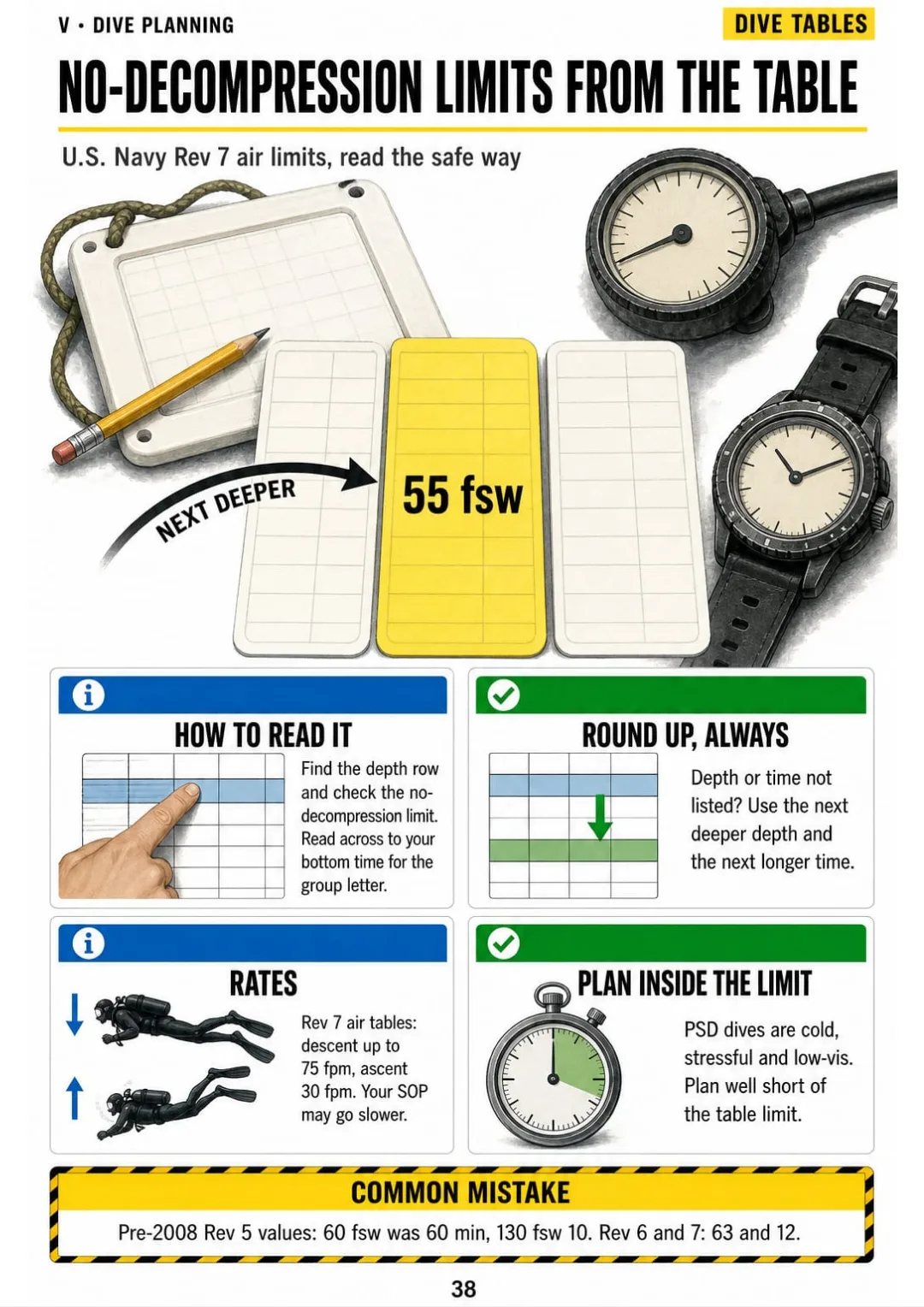
Navy Rev 7 air NDLs: 52 ft rounds to 55 fsw → 74 minutes.
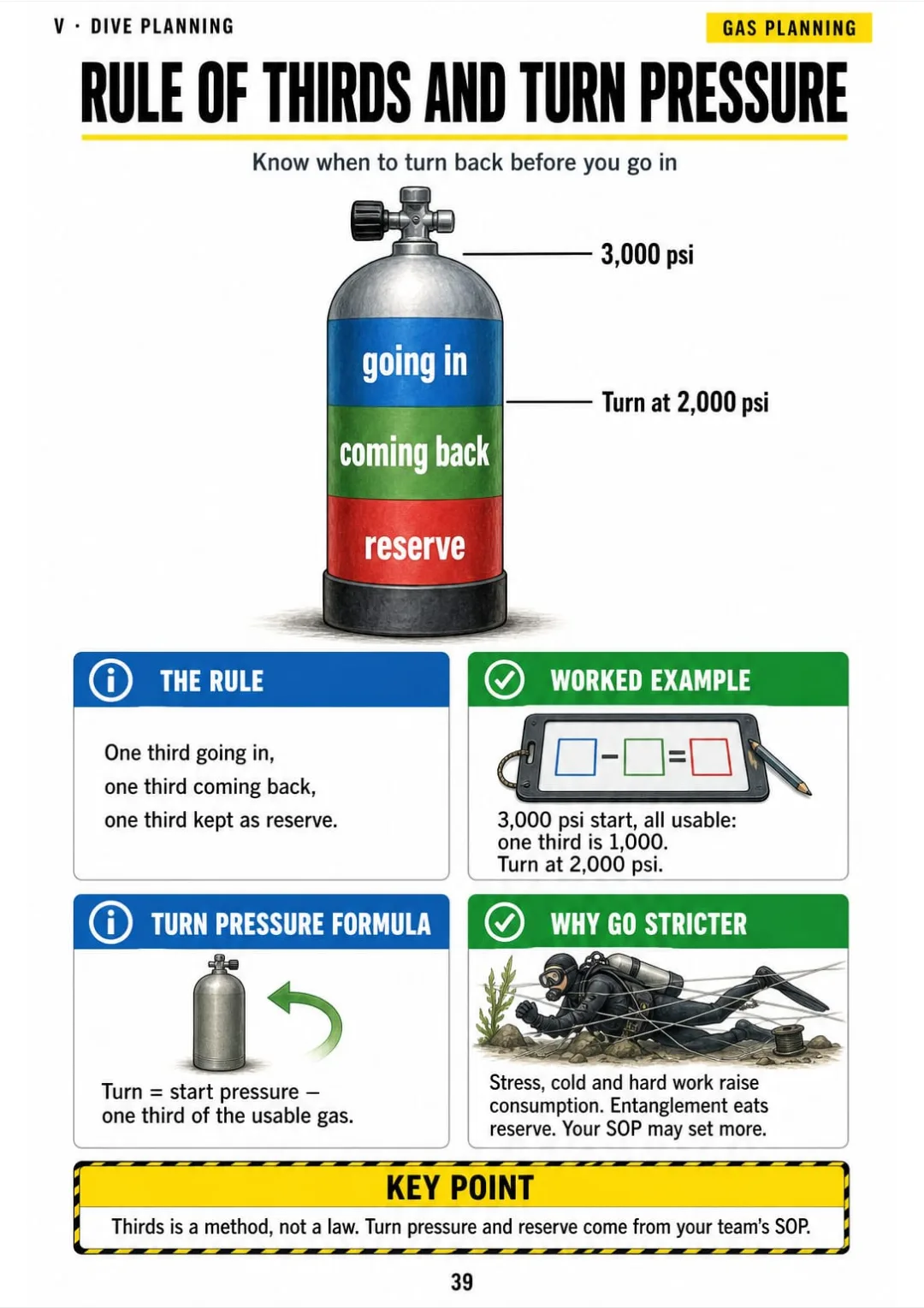
Rule of thirds: 3,000 psi start → turn at 2,000, keep 1,000 in reserve.
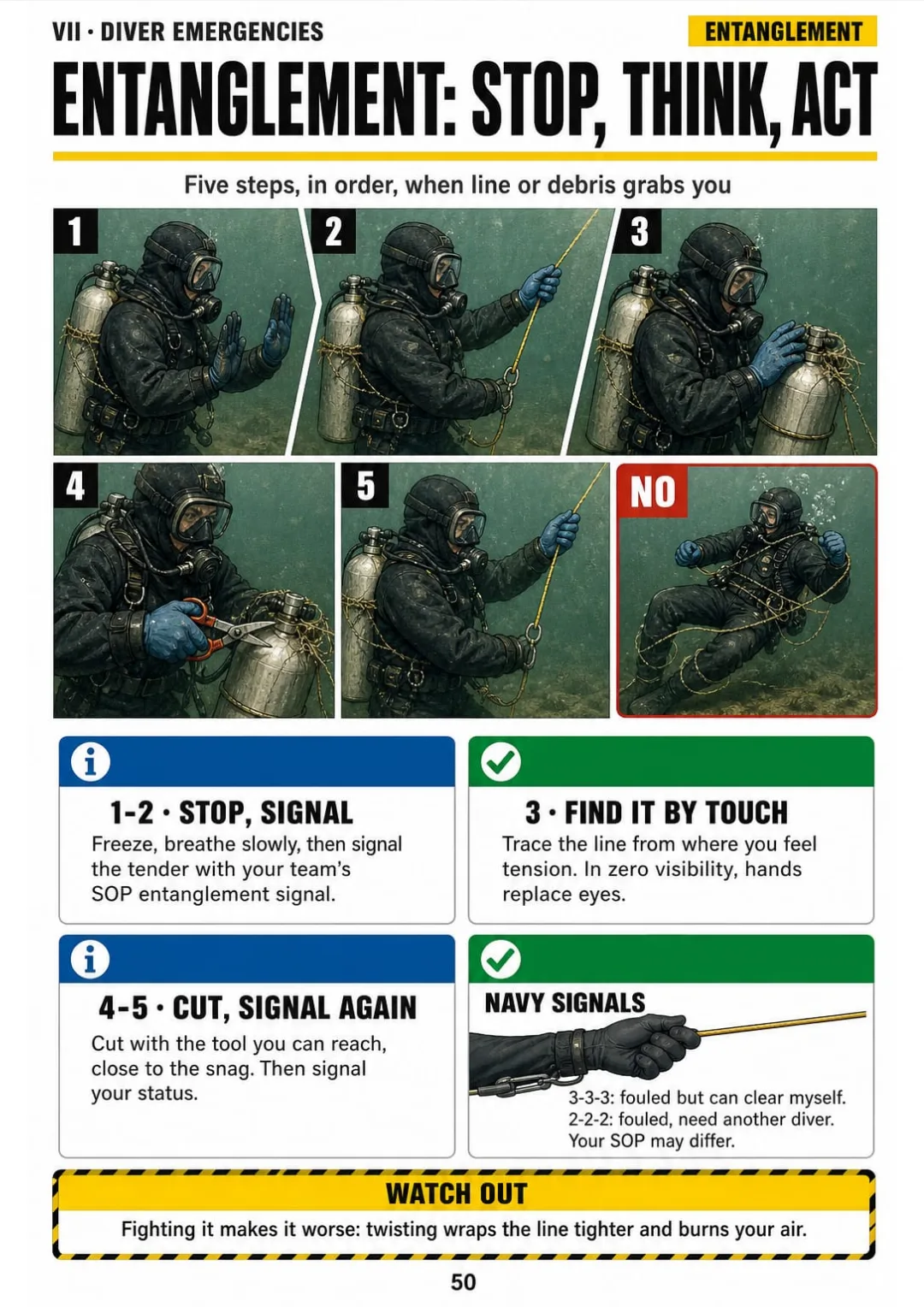
Entanglement in 5 steps: stop, signal, find by touch, cut, signal again.
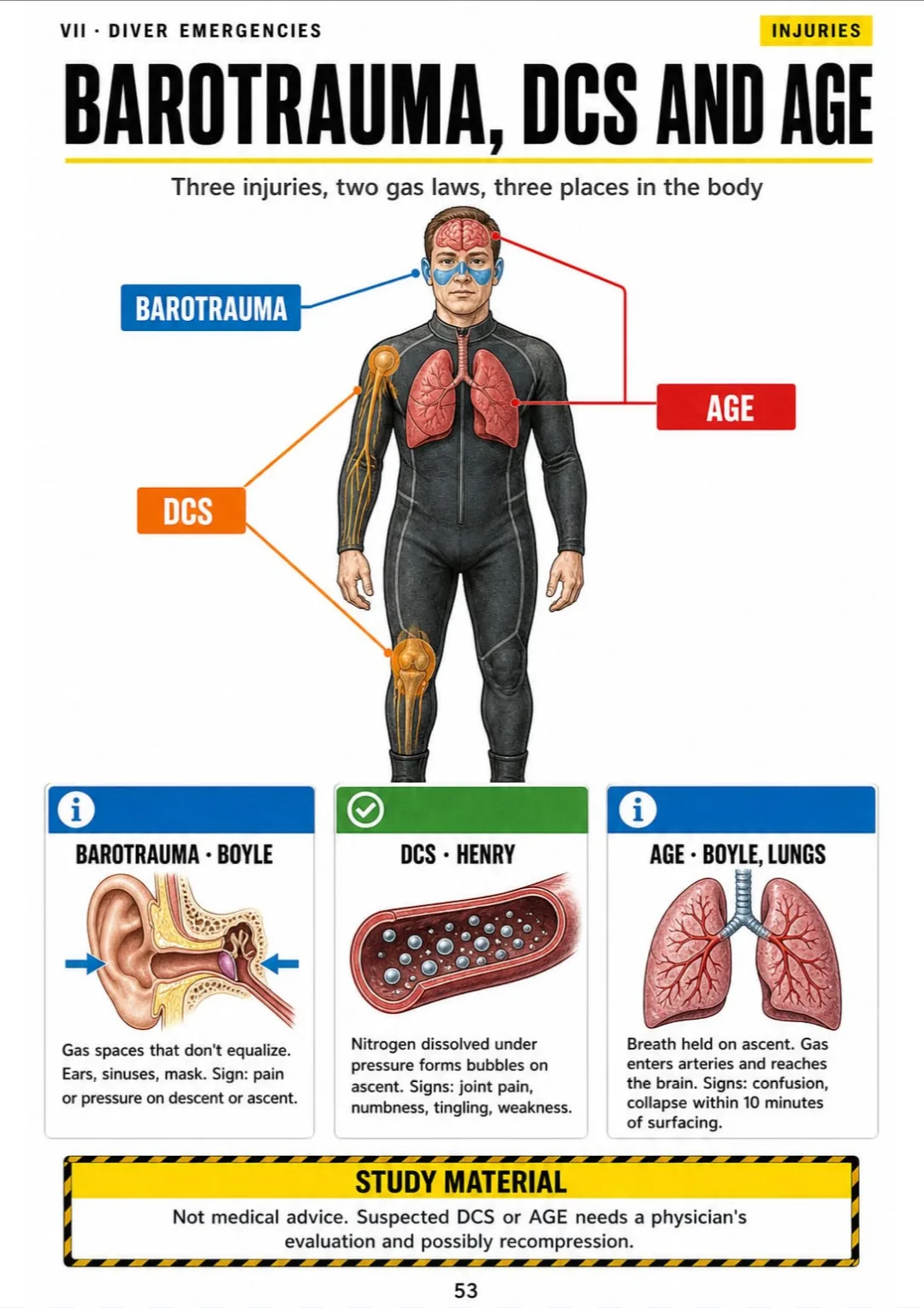
Ears and sinuses: barotrauma. Joints and nerves: DCS. Brain and lungs: AGE.
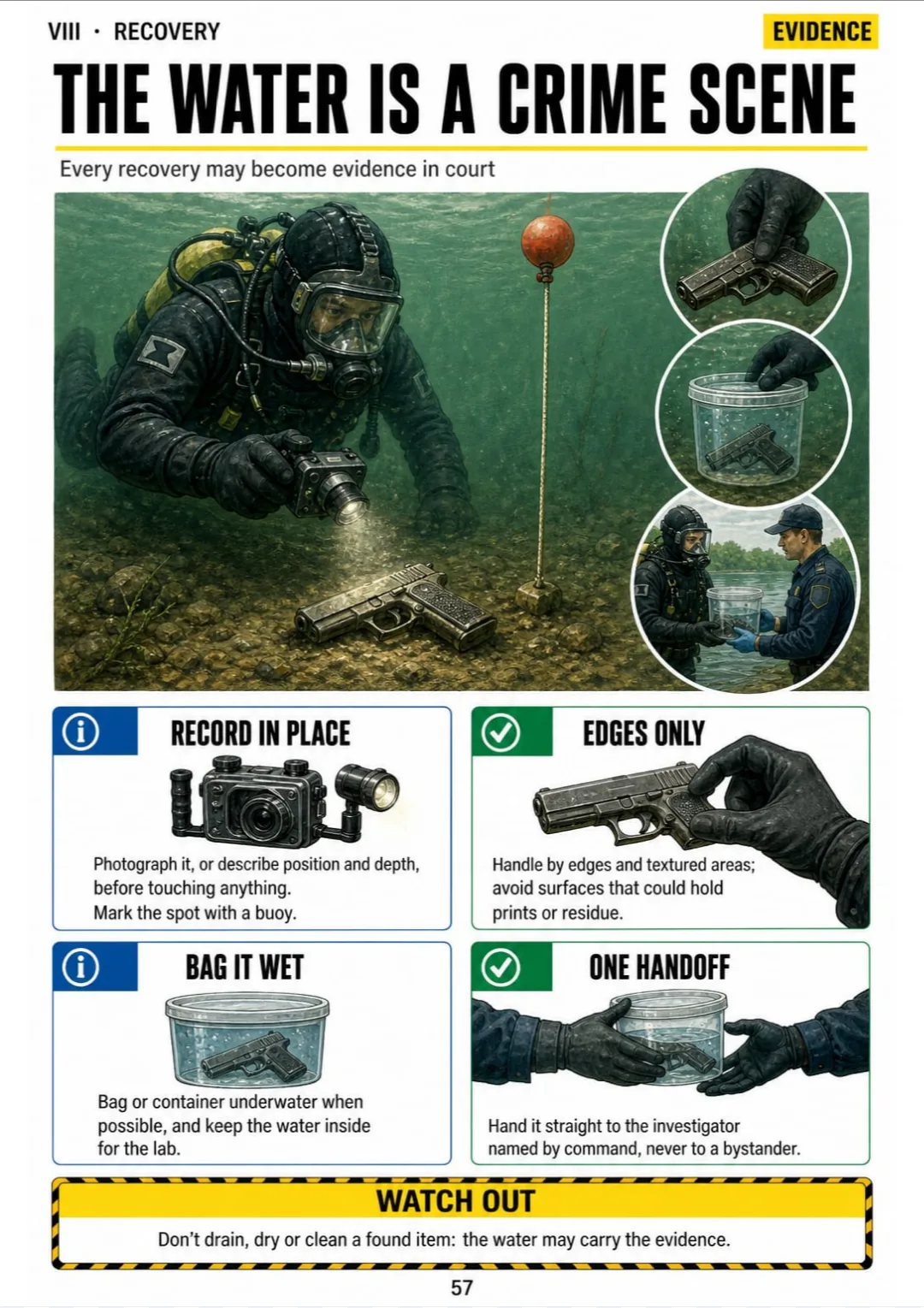
Evidence underwater: record in place, edges only, bag it wet, one handoff
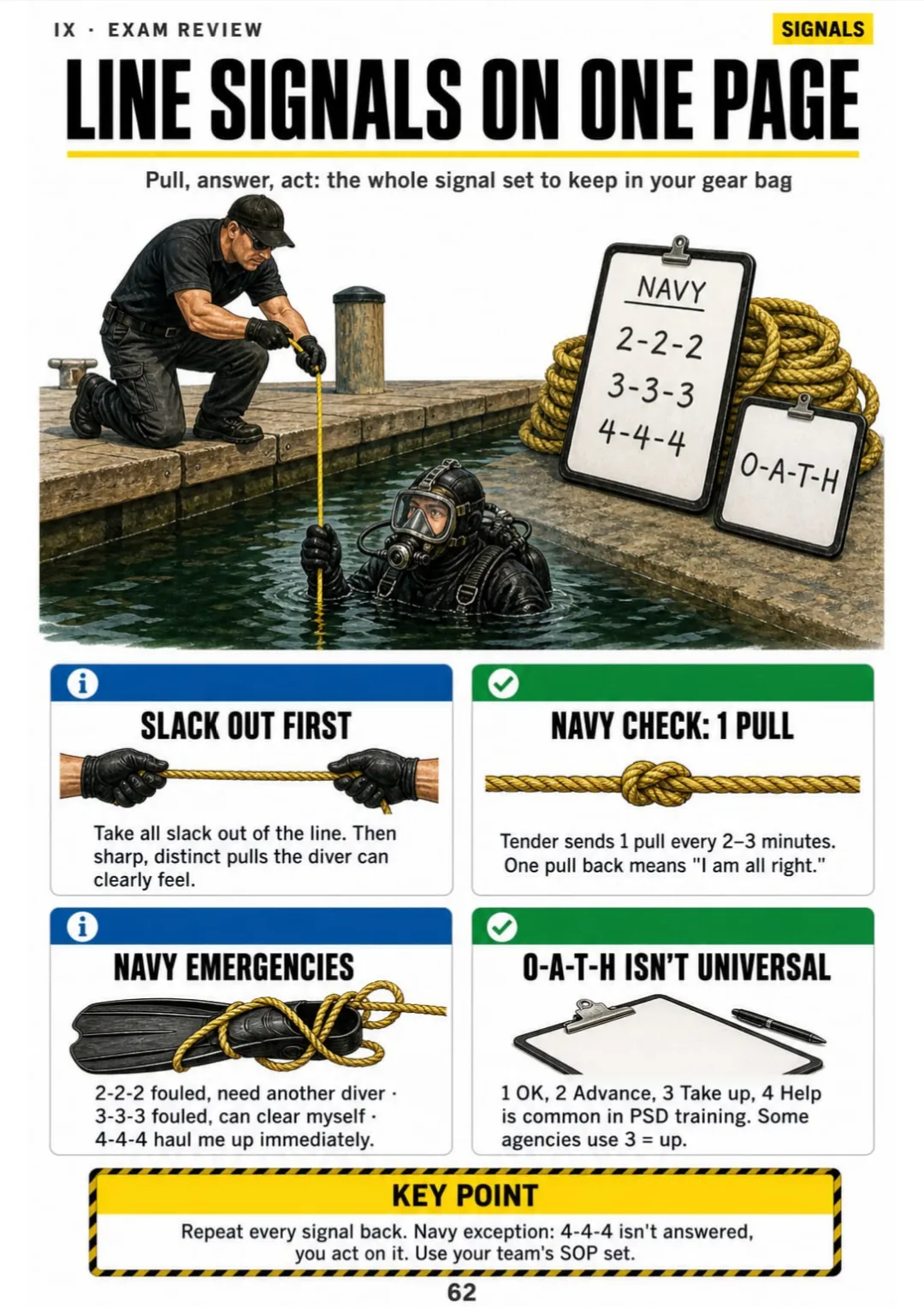
Navy 2-2-2, 3-3-3, 4-4-4 and O-A-T-H side by side, with the answer rule
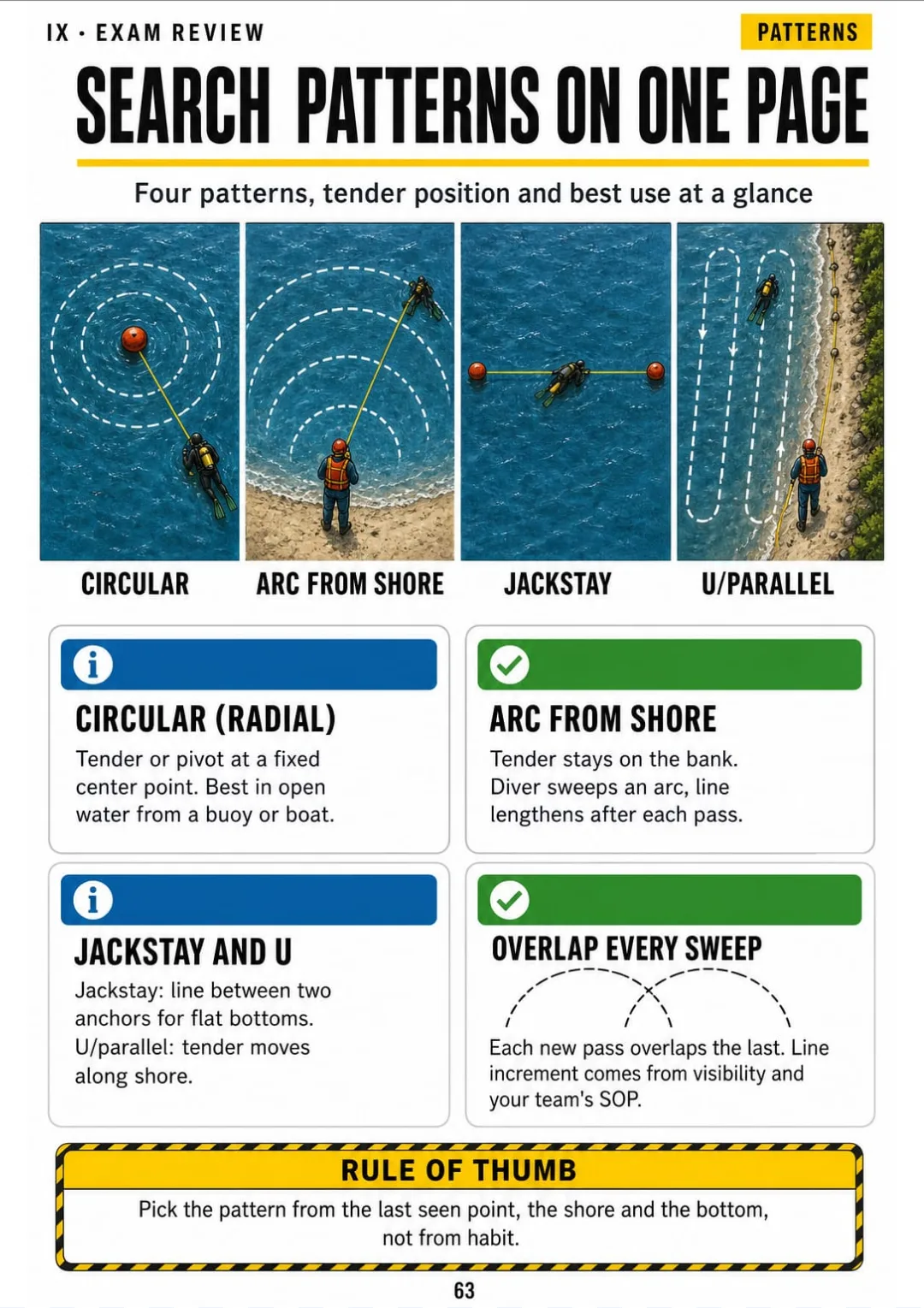
4 search patterns drawn side by side with tender position and best use

Swipe to see more →

These are real pages from the book. The table of contents is the full one: 9 parts and 62 topics.

The Problem Isn't You. It's How It Was Explained.

You're at the skills evaluation with a slate in your hand. The instructor says: “You start with 3,000 psi. When do you turn?” And the team leader is right there, waiting.

You studied it. But the manual explains gas planning in three paragraphs of fractions and exceptions, without one picture of the cylinder. Under pressure, the numbers slide around.

Rule of thirds: 3,000 psi start → turn at 2,000, keep 1,000 in reserve.

In the book, the rule of thirds is a cylinder split into three bands: one third in, one third out, one third in reserve. 3,000 at the top, the turn mark at 2,000, the red reserve band at 1,000.

Line-pull signals, search patterns, the no-decompression table, entanglement and a vehicle on the bottom work the same way: each one gets its own page.

You see the page, it makes sense, and you write the turn pressure on your slate without going back to the binder.

COMPARE FOR YOURSELF

Same Topic, Two Ways to Study It

THIS
  • The manual: line after line of text
  • Dive tables explained with words alone
  • 52 ft? You hunt the table for the right row
No-decompression limits represent the maximum bottom time, measured from leaving the surface until leaving the bottom, that a diver may remain at a given depth and still ascend directly to the surface at the prescribed rate without planned decompression stops. When the actual depth of the dive falls between tabulated depths, the next greater depth shall be used, and when the bottom time exceeds the tabulated value, the dive shall be treated as a decompression dive in accordance with the applicable schedule and repetitive group designation.
FOR THIS
  • The no-decompression table in one drawing
  • The depths and minutes in a box
  • 52 ft → round up to 55 → 74 minutes, in one box
Navy Rev 7 air NDLs: 52 ft rounds to 55 fsw → 74 minutes.
CONTENTS

Take a Look at the 9 Parts and 62 Topics

The dive rescue job, diving physics, gear, tending and line signals, size-up and dive planning, search patterns, diver emergencies, recovery and decon, and a final review before the exam: 66 pages, all illustrated.

IThe Dive Rescue Job · pp. 5-9
  1. What NFPA 1006 Asks of a Dive Rescuer
  2. Public Safety Diving Is Not Recreational Diving
  3. The Dive Team and Its Roles
  4. Awareness, Operations, Technician
  5. Fit for Duty Before You Get Wet
IIDiving Physics You Must Know · pp. 10-16
  1. Pressure: 33 Feet of Salt, 34 of Fresh
  2. Boyle's Law and the First 33 Feet
  3. Air Consumption Grows with Depth
  4. Partial Pressure and Nitrogen
  5. Cold Water Steals Heat
  6. Light, Sound and Zero Visibility
  7. Altitude Diving Changes the Table
IIIGear for Public Safety Diving · pp. 17-24
  1. The PSD Diver, Head to Toe
  2. Full-Face Mask vs. Half Mask
  3. Redundant Air: Pony Bottle and Bailout
  4. Cylinders: Sizes, PSI and Cubic Feet
  5. Cutting Tools and Where They Go
  6. The Harness and the Tether
  7. Communications: Line, Hardwire, Wireless
  8. Pre-Dive Gear Check in the Same Order
IVTending and Line Signals · pp. 25-31
  1. The Tender Runs the Dive
  2. Line-Pull Signals: O-A-T-H
  3. Search Direction Signals
  4. Every Signal Gets an Answer
  5. Hand Signals for the Surface and Low Vis
  6. Line Management on Shore
  7. Tracking the Dive: Time, Depth, PSI
VSize-Up and Dive Planning · pp. 32-40
  1. Rescue or Recovery: The Risk-Benefit Call
  2. Go / No-Go Checklist
  3. Witness Interview and Last Seen Point
  4. Triangulation from Two Witnesses
  5. Hazards Under the Surface
  6. The Dive Plan in 6 Steps
  7. No-Decompression Limits from the Table
  8. Gas Planning: Rule of Thirds and Turn Pressure
  9. The Emergency Plan Before Anyone Enters
VISearch Patterns · pp. 41-48
  1. Choosing the Pattern
  2. Circular (Radial) Search
  3. Arc Search from Shore
  4. Jackstay Search
  5. U-Pattern / Parallel Search
  6. Search Pattern: Worked Example
  7. Searching by Touch
  8. Marking a Find and Area Searched
VIIDiver Emergencies · pp. 49-55
  1. The 90% Ready Backup Diver
  2. Entanglement: Stop, Think, Act
  3. Out of Air and Free-Flow
  4. Lost Line and Lost Diver
  5. Pressure Injuries: Barotrauma, DCS, AGE
  6. First Response to a Diving Injury
  7. Hypothermia and the Shivering Diver
VIIIRecovery, Evidence and Decon · pp. 56-61
  1. Victim Recovery, Step by Step
  2. Evidence: Treat the Water as a Crime Scene
  3. Chain of Custody on the Dive Log
  4. Vehicle in the Water
  5. Contaminated Water: Levels of Risk
  6. Decontamination After the Dive
IXReview Before the Exam · pp. 62-66
  1. Line Signals on One Page
  2. Search Patterns on One Page
  3. Dive Plan and Gas Math Cheat Sheet
  4. Skills Test Day Checklist
  5. Common Mistakes Before the Exam

One Page, One Topic, All Clear

Think of it this way:

You're tending on shore. Your diver is down in black water and the line gives you two pulls. You have a second to know what that means, and to answer it.

In the book you open the line signals page and see every signal drawn pull by pull: O-A-T-H next to the Navy 2-2-2, with the rule that every signal gets an answer.

Ears and sinuses: barotrauma. Joints and nerves: DCS. Brain and lungs: AGE.

Same with the jackstay search, turn pressure, the no-decompression table, entanglement and a vehicle on the bottom: each one on its own page.

Dive Rescue Illustrated is 9 parts and 62 topics, all drawn, and it ends with a review: line signals, search patterns and gas math on one page each, plus a skills test day checklist.

What you see drawn, you don't have to memorize.

What's Inside Dive Rescue Illustrated:

Ipp. 5-9

The Dive Rescue Job

What NFPA 1006 asks of a dive rescuer, why public safety diving isn't recreational diving, team roles, the three levels and fitness for duty.

IIpp. 10-16

Diving Physics You Must Know

Pressure in salt and fresh water, Boyle's law, air consumption at depth, nitrogen, cold water, zero visibility and altitude.

IIIpp. 17-24

Gear for Public Safety Diving

The PSD diver head to toe, full-face mask, pony bottle and bailout, cylinders, cutters, harness and tether, comms and the pre-dive check.

IVpp. 25-31

Tending and Line Signals

The tender's job, O-A-T-H and search direction signals, the answer rule, hand signals, line management and tracking time, depth and psi.

Vpp. 32-40

Size-Up and Dive Planning

Rescue or recovery, go / no-go, witness interviews, triangulation, hazards, the 6-step dive plan, no-decompression limits, rule of thirds and the emergency plan.

VIpp. 41-48

Search Patterns

Choosing a pattern, circular, arc, jackstay and U searches, a worked example, searching by touch and marking the find.

VIIpp. 49-55

Diver Emergencies

The 90% ready backup diver, entanglement, out of air, lost line, barotrauma, DCS and AGE, first response and hypothermia.

VIIIpp. 56-61

Recovery, Evidence and Decon

Victim recovery, evidence and chain of custody, vehicles in the water, contaminated water levels and decon.

IXpp. 62-66

Review Before the Exam

Line signals, search patterns and gas math on one page each, the skills test checklist and the most common mistakes.

At the end of the book: A final review section: line signals, search patterns and gas math on one page each, plus a skills test day checklist.
Plus: 2 Free Books

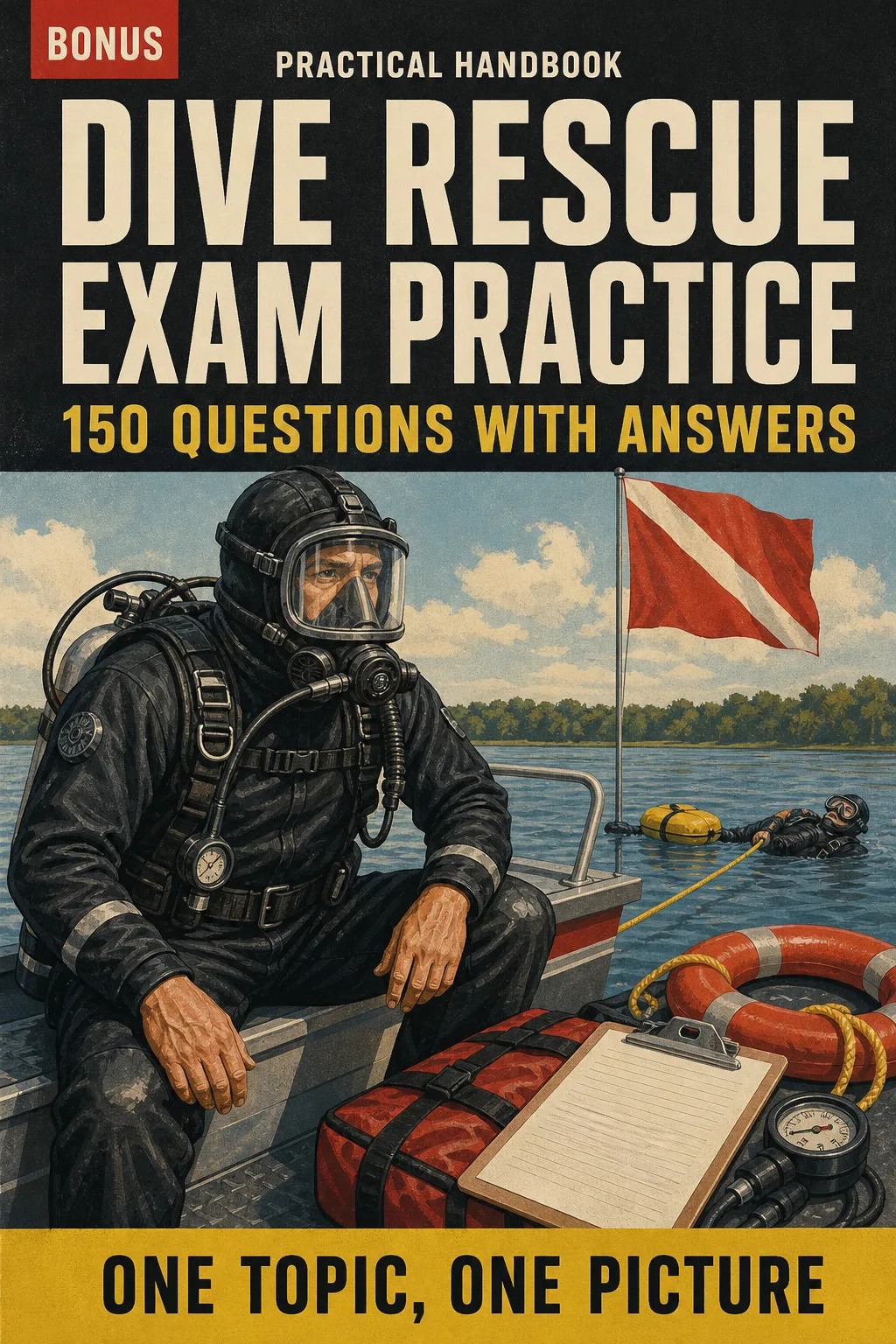
Dive Rescue Exam Practice: 150 Questions with Answers

BONUS 1: «Dive Rescue Exam Practice: 150 Questions with Answers»

Value on its own: US$ 17.90

Test yourself in the same style as the written exam and see exactly which page to go back to for every answer you miss.

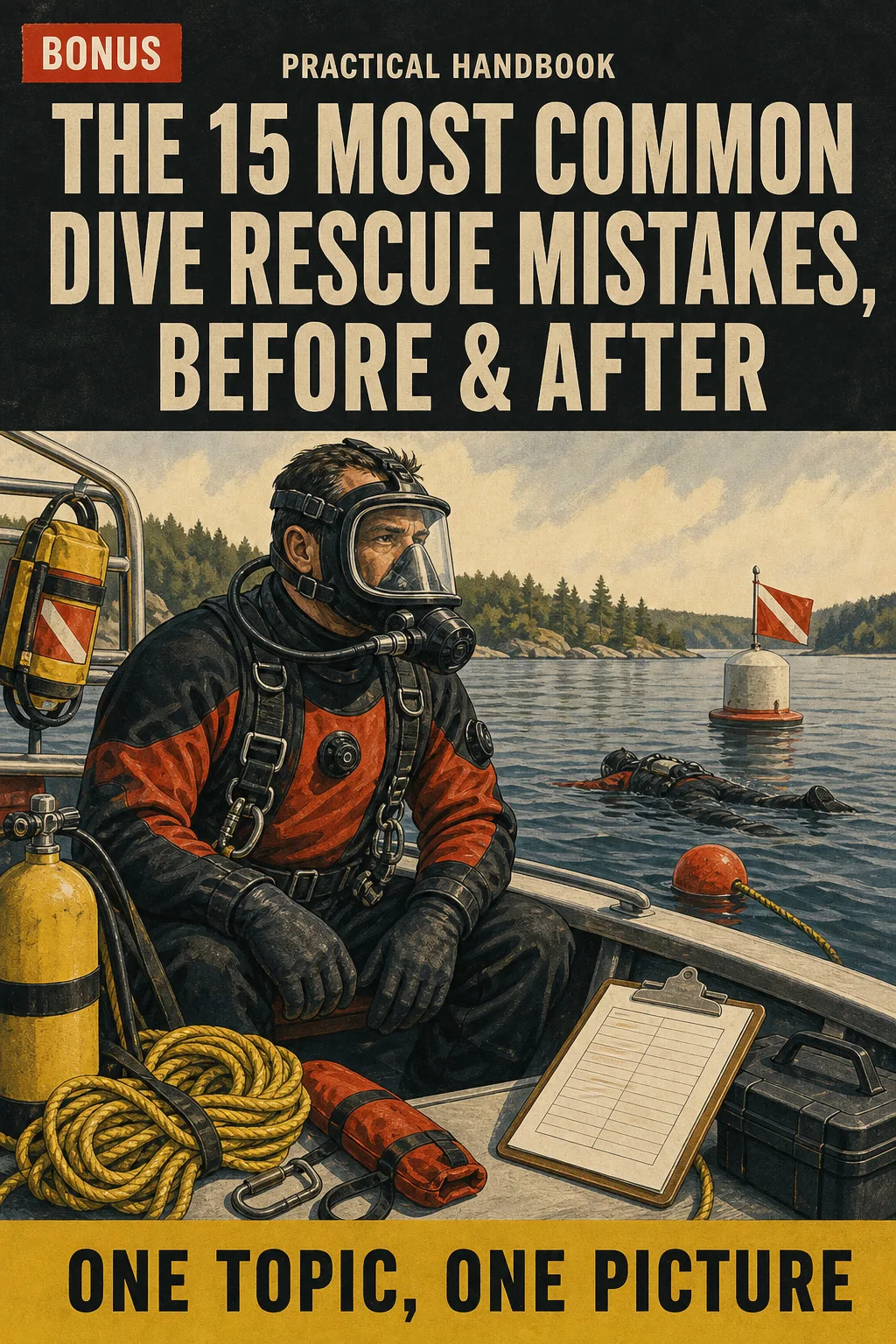
The 15 Most Common Dive Rescue Mistakes, Before & After

BONUS 2: «The 15 Most Common Dive Rescue Mistakes, Before & After»

Value on its own: US$ 14.90

See the most frequent errors in tending, signals, search patterns and gas planning drawn side by side with the right way, so you can review in minutes.

Dive Rescue Illustrated with 2 Free Books

  • Dive Rescue Illustrated: 66 illustrated pagesUS$ 63
  • BONUS 1: Dive Rescue Exam Practice: 150 Questions with AnswersUS$ 17.90
  • BONUS 2: The 15 Most Common Dive Rescue Mistakes, Before & AfterUS$ 14.90
  • High-resolution PDF to printIncluded
Total value US$ 95.80
YOUR PRICE:
US$ 27
You save US$ 68.80
YES, I WANT DIVE RESCUE ILLUSTRATED FOR US$ 27

📄 This is a digital PDF book sent to your email: nothing is printed or shipped.

Secure purchaseEncrypted payment30-day guarantee

PDF by email: We email you Dive Rescue Illustrated as a PDF, together with the two free books. It's a single payment: no installments, no extra charges.

Who This Book Is For

You just joined the dive team

You just joined the dive team

You get the whole course in order, one drawing per topic, so the slides finally make sense between calls.

Your certification date is close

Your certification date is close

You review signals, search patterns and the dive plan in the same order every time, and check yourself with 150 practice questions.

You already dive or tend

You already dive or tend

You keep line signals, the rule of thirds and the vehicle approach printed at the station for your next recert.

Everything You Get Today

US$ 95.80US$ 27
YES, I WANT DIVE RESCUE ILLUSTRATED FOR US$ 27

📄 This is a digital PDF book sent to your email: nothing is printed or shipped.

30DAYS
GUARANTEE

30-Day Guarantee

Try Dive Rescue Illustrated for 30 days, bonus books included.

We refund everything if the file won't open, if the book isn't what you see here, if you were charged twice or if the email doesn't arrive. Just email us.

You pay once. No subscriptions.

Frequently Asked Questions

Is it for me if I've been a firefighter for years and just joined the dive team?

Yes. It starts with what the job asks of a dive rescuer and builds up to search patterns and recovery. It doesn't assume a recreational diving background, and it doesn't talk down to you.

Where does the content come from?

It's checked against the Dive chapter of NFPA 1006 (2021 edition), which is now part of NFPA 2500, the operational levels that came from NFPA 1670, and the U.S. Navy Diving Manual Rev. 7 air tables.

Is this official material?

No. It's an independent study book, not published or endorsed by NFPA, any State Fire Marshal or any certifying body, and it doesn't give you a certificate or CE hours. It follows the NFPA 1006 Dive job performance requirements that state Technical Rescuer – Dive programs are built on, so it works as a review wherever your cert is based on that standard. Your team's own signal system and SOPs always come first.

Does it replace my dive rescue course?

No. It doesn't replace your course, your in-water training, your agency's SOPs or your medical protocol. Your binder has everything; this book puts each topic on one page with a drawing, so you can review a signal, a search pattern or your turn pressure in a minute between calls.

Are the practice questions the ones on the exam?

No. The 150 questions were written for this book so you can check yourself. They are not official exam questions.

When and how do I get it?

The book and the 2 free books come as PDFs by email, to the address you enter at checkout.

Do I have to pay every month?

No. It's a one-time payment. No subscription.

Can I print it?

Yes. It's a printable PDF: print the whole book or just the pages you want at the station or in your gear bag.

How does the refund work?

You have 30 days. We refund everything if the file won't open, if the book isn't what you see on this page, if you were charged twice or if the email doesn't arrive: just email us.

Before You Close This Page

No more rereading the binder with nothing sticking.

Line signals and search patterns: you see them drawn and you've got them.

You walk into the skills test knowing where everything is.

Drawings make studying faster.

The book is right below.

One-time payment: US$ 27 · Guarantee: 30 days · PDF by email

YES, I WANT DIVE RESCUE ILLUSTRATED FOR US$ 27

📄 This is a digital PDF book sent to your email: nothing is printed or shipped.